4 hr
Half-Day Margaux Wine Experience
Explore prestigious Margaux estates, taste Grand Cru wines, and discover Bordeaux's winemaking heritage
Reserve
Hand-picked by our editors — only the best 5 experiences from 47 reviewed.
Verified partners for every tour, free cancellation where available, and instant confirmation on every booking.
4 hr
Explore prestigious Margaux estates, taste Grand Cru wines, and discover Bordeaux's winemaking heritage
Reserve
9 hr
Explore both banks of Bordeaux's wine country with tastings at three estates and a château picnic lunch
Reserve
4 hr
Intimate afternoon exploring prestigious Left Bank vineyards with tastings at two premium estates
ReservePrices from verified partners. Availability updates in real time at checkout. Free cancellation policies apply where shown.
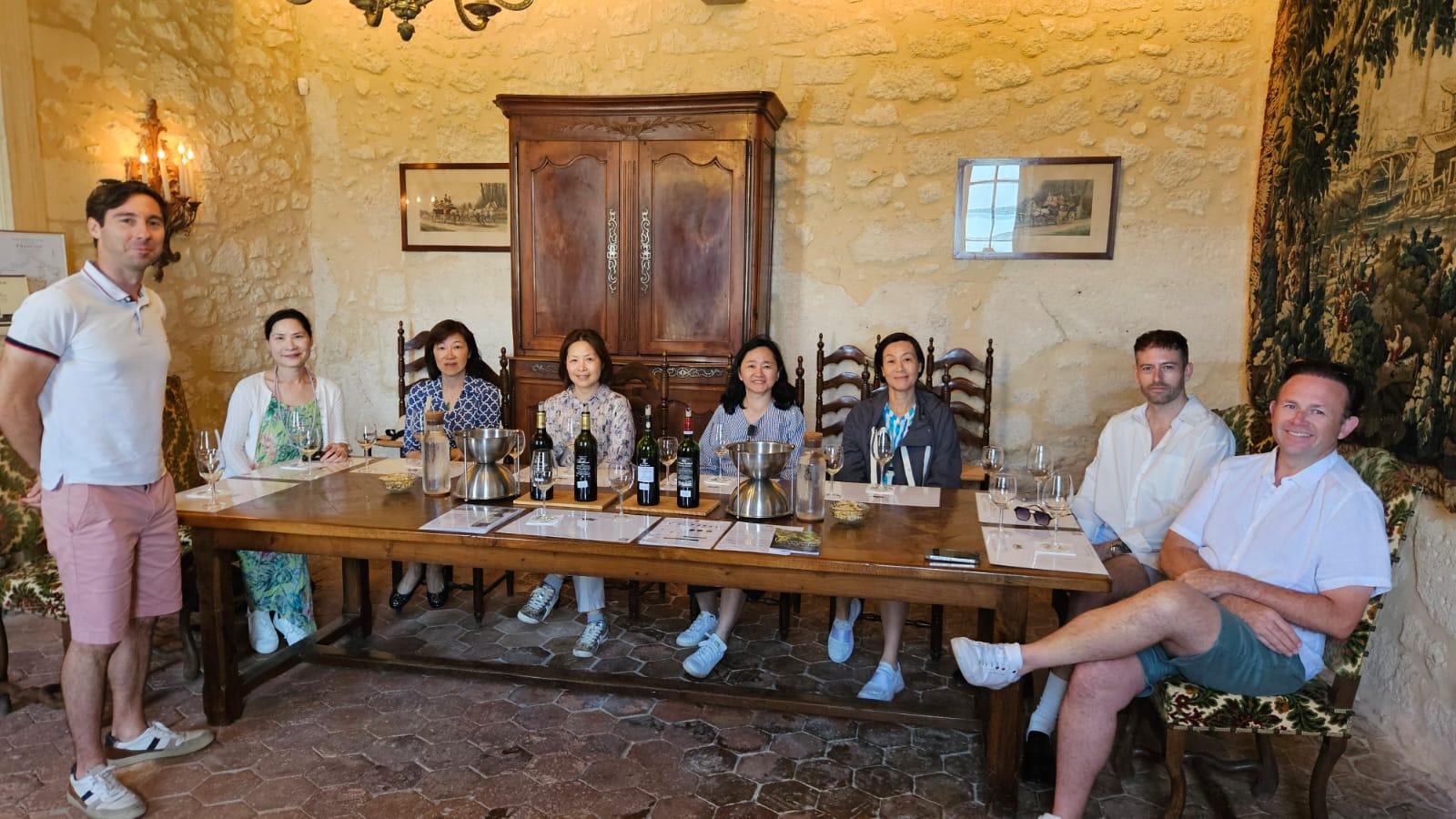
The landmarks, rooms, and views travelers on this tour remember — all visible on a single visit.
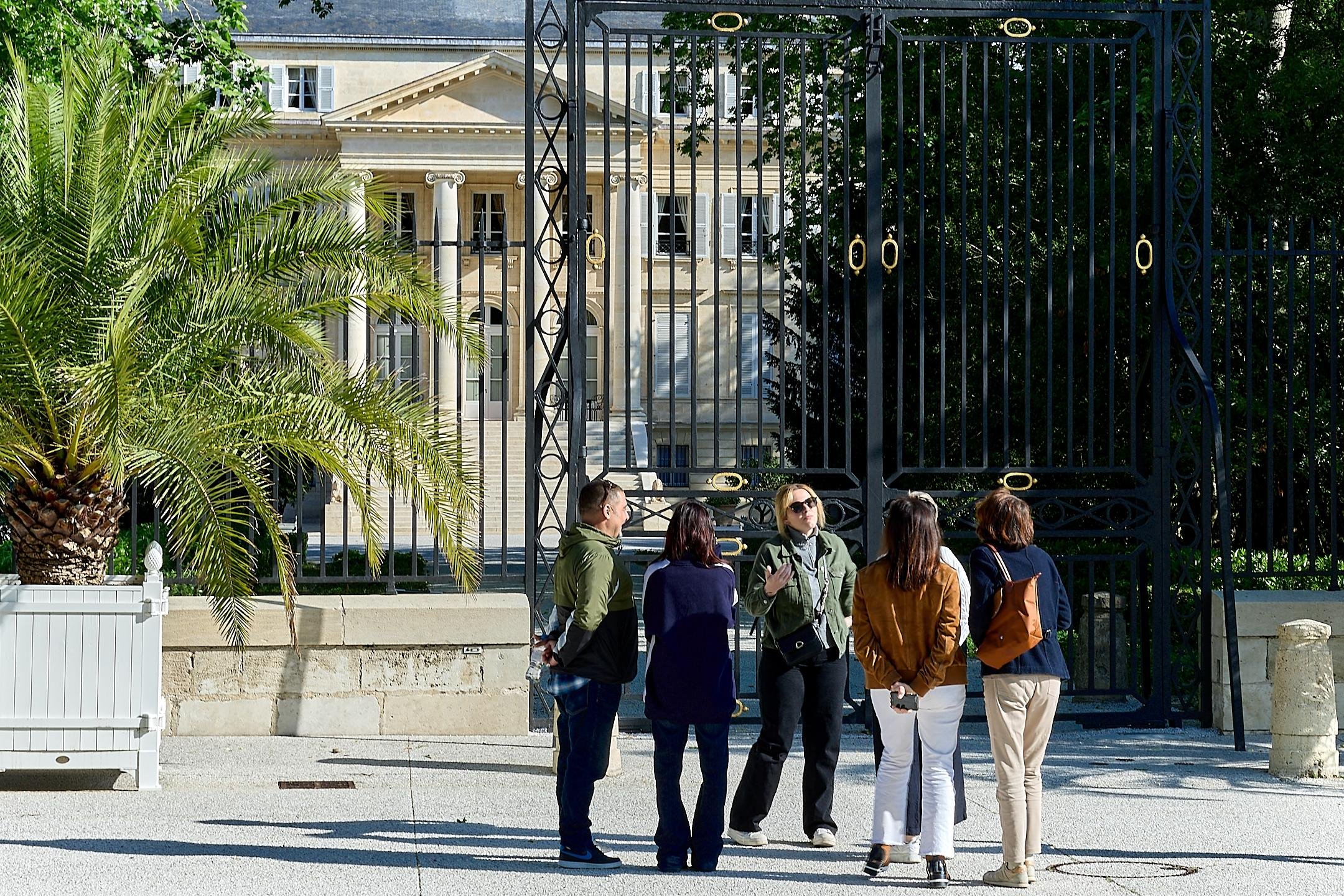
The flagship wine of this estate is celebrated for its elegance and longevity, often produced in limited quantities. Visitors can view the historic neoclassical facade that defines the winery aesthetic.
They complement each other; most visitors who do both call the Margaux wine tour from bordeaux the more refined experience for fans of structural elegance, while St-Émilion is favored for its charming village atmosphere. Selecting the right margaux wine tour from bordeaux tours depends entirely on whether you prefer the iconic terroir of the Médoc or the historic landscape of the Right Bank.
| Feature | Top pick Margaux | St-Émilion |
|---|---|---|
Wine Style |
Elegant and structured | Velvety and rich |
Appellation Character |
Médoc prestige | Village heritage |
Vineyard Architecture |
Grand neoclassical châteaux | Medieval stone estates |
Travel Time from City |
45–60 minutes | 45–60 minutes |
Terrain |
Flat gravel banks | Rolling limestone hills |
Primary Grape Variety |
Cabernet Sauvignon | Merlot |
| See tickets → |
Verdict: Choose a margaux wine tour from bordeaux tickets if you seek deep, age-worthy red blends, or visit St-Émilion if you prefer a picturesque, pedestrian-friendly wine region experience.
Choose your ticket, select your date, and reserve in under two minutes. Secure checkout handled by our verified partner.
Instant confirmation by email, with a mobile voucher you can save offline. No printing, no queuing at a collection desk.
Arrive at the entrance, show your voucher on your phone, and walk in. Most tickets include priority or skip-the-line access.
Practical details for your visit straight from our verified partners — hours, access, rules, and how to get there.
12 rue de la Tremoille
Central hub for regional information.
Follow the D2 route, known as the Route des Châteaux, for direct access.
Take the regional train to Margaux station and walk.
Smart-casual attire is recommended for any margaux wine tour from bordeaux visit. Walking through vineyard rows often requires sturdy footwear rather than high heels.
Small personal bags are generally permitted during your margaux wine tour from bordeaux excursion. Large luggage may need to be stored at the tourism office or your transport vehicle.
Photography is generally permitted in public areas during your margaux wine tour from bordeaux trip. Always ask for permission before capturing images inside private winery cellars.
The tourism office for your margaux wine tour from bordeaux is accessible to visitors with reduced mobility. Some historic wine estates may have uneven gravel paths or staircases.
Mobile phones are permitted for capturing photos and videos. Silence devices during guided tastings and formal presentations.
Families are welcome, though wine tasting is restricted to adults over 18. Some wineries offer non-alcoholic grape juice or educational tours for younger guests on a margaux wine tour from bordeaux.
Picnicking is generally prohibited inside the wine estates themselves. Many operators provide lunch options as part of your margaux wine tour from bordeaux package.
Pets are generally not allowed inside winery production facilities. Service animals are permitted with prior notification.
Ensure your margaux wine tour from bordeaux involves confirmed appointments as many estates do not accept walk-ins. Weather in the Gironde department can change quickly, so check forecasts.
Best time to go, insider tips, nearby landmarks, and the cancellation fine print — flip through to skim what matters to you.
How crowds, weather, and events shift across the year.
Mild temperatures and blossoming vines make this an ideal time for a margaux wine tour from bordeaux.
Expect warm days and busy vineyard activity as the harvest approaches in late August.
The harvest season is the most active time for a margaux wine tour from bordeaux trip.
Cooler weather with fewer crowds allows for more intimate tours of the Médoc estates.
Small details that turn a good visit into a great one.
Always secure your margaux wine tour from bordeaux appointments weeks in advance as top estates fill up quickly. Many famous châteaux are not open to walk-in visitors.
Visit the tourism office at 12 rue de la Tremoille to get local maps for your margaux wine tour from bordeaux travels. Staff can assist in navigating estate access policies.
Remember the office operates 09:00–17:00 and is closed on Saturdays and Sundays. Plan your margaux wine tour from bordeaux logistics during weekday operating hours.
Drink plenty of water between vineyard visits during your margaux wine tour from bordeaux day. The summer heat in the Bordeaux Wine Region can be intense.
Choose comfortable footwear suitable for walking on uneven vineyard terrain for your margaux wine tour from bordeaux visit. Leave formal wear for evening dining back in Bordeaux.
Non-bookable sights within a short walk — free to visit, easy to pair.
An iconic estate featuring neoclassical architecture and world-renowned vineyards.
A historic religious site located in the heart of Margaux-Cantenac.
A local administrative building showcasing regional style architecture.
Flexible, no hidden fees.
Cancellation policies depend on the specific winery visited during your margaux wine tour from bordeaux. Individual bookings typically follow the operator's terms as communicated at the time of reservation.
Hand-picked options within walking distance — pick a district for vibe, or a specific hotel for convenience.
Upscale property with gardens and premium amenities.
Golf resort hotel set within the vineyards.
Various boutique bed and breakfasts found in the village center.
The Margaux appellation produces fewer than four million bottles annually across 1,500 hectares, yet its name commands recognition in auction houses from Hong Kong to New York. Twenty-one châteaux hold classified-growth status here, the highest concentration per hectare in the Médoc. Château Margaux itself—the appellation's crown jewel—was already renowned when Thomas Jefferson visited in 1787 and declared its wine among the four greatest of Bordeaux. The estate's neoclassical facade, completed in 1810, remains one of the most photographed structures in the wine world. Margaux sits 25 kilometers north of Bordeaux city center, its gravelly plateau rising just above the Gironde estuary. The soil composition—deep beds of Günzian gravel deposited 600,000 years ago—drains rapidly and radiates heat, creating ideal conditions for Cabernet Sauvignon and Merlot. Unlike the clay-limestone terroir of the Right Bank, this Left Bank geology produces wines of elegance rather than power, with pronounced tannins that soften over decades. The appellation's borders, defined in 1954, span five communes: Margaux, Cantenac, Labarde, Arsac, and Soussans. Each village contributes nuance—Cantenac's iron-rich soils yield structure, while Margaux's pure gravel delivers finesse. Modern Margaux remains rooted in 19th-century techniques. Most estates still hand-harvest, and fermentation occurs in temperature-controlled vats before aging in French oak barriques for 12 to 24 months. The 1855 Classification endures as the appellation's framework: Château Margaux stands alone in the first growth tier, five estates occupy the second (including Rauzan-Ségla and Durfort-Vivens), ten claim third-growth status, and five more round out the fourth and fifth tiers. Cooperative cellars and unclassified producers fill the gaps, offering entry-level bottles that still carry the appellation's pedigree. Day trips from Bordeaux typically pair Margaux visits with neighboring appellations—Saint-Julien, Pauillac, or Saint-Émilion—to showcase terroir contrasts. Half-day itineraries focus on two to three estates, allowing time for barrel-room tours and vertical tastings. Full-day excursions expand the scope to include the Médoc's broader sweep, from the gravel croupes of Listrac to the riverside communes near Pauillac. The Margaux tourism office at 12 rue de la Tremoille coordinates château appointments; most estates require advance booking and close weekends. Harvest season, from late September through October, restricts public access as cellars prioritize vinification. Spring and early summer offer the calmest visit windows, with bud break and flowering providing visual interest beyond the tasting room.
"The appellation's borders, defined in 1954, span five communes, each village contributing nuance to the Left Bank's gravelly terroir."
A step-by-step walkthrough of the visit — what you'll see, how long each stage takes, and the details that matter.
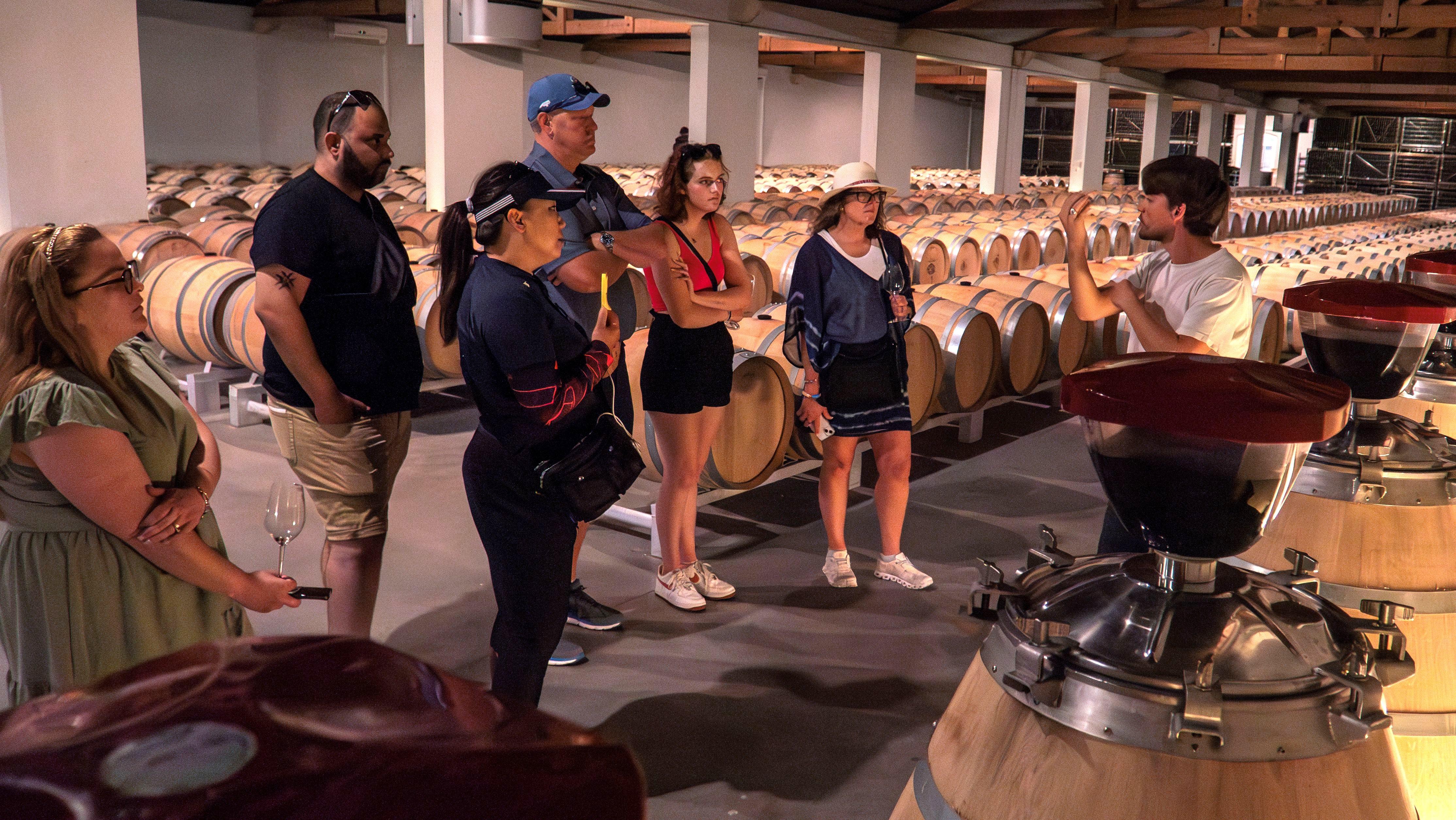
Your driver collects you from central Bordeaux between 9:00 and 9:30, heading north along the D2 wine route as the cityscape gives way to ordered vine rows. Within 35 minutes you pass the Margaux appellation sign, its stone marker flanked by centuries-old estates. The first château—often a third or fourth growth—opens its cellars for a guided walk through fermentation halls and barrel rooms, the air heavy with oak and fermenting must. You taste three to four vintages, comparing recent releases against reserve bottlings that show how Cabernet Sauvignon evolves over a decade. Mid-morning brings a second estate, typically higher-tiered, where the guide explains assemblage—the blending of parcels and grape varieties that defines Bordeaux winemaking. You sample from individual barrels, noting how Merlot softens Cabernet's edges and Petit Verdot adds spice. The château's architecture varies: some estates retain 18th-century chartreuses, others rebuilt in the Belle Époque with turreted silhouettes. Gravel courtyards crunch underfoot as you move between tasting rooms and terraced vineyards overlooking the Gironde. Half-day tours return you to Bordeaux by 1:00 PM, leaving afternoons free for the city. Full-day itineraries continue into Saint-Émilion or loop through Pauillac, adding two more appellations and a restaurant lunch amid the vines. Each stop deepens your grasp of Left Bank precision—the structured tannins, the emphasis on Cabernet dominance, the patience required to unlock these wines' potential. By day's end you've swirled a dozen crus, each glass a distillation of gravel, climate, and centuries of refinement.
The tourism office is open Monday through Friday from 09:00–17:00. It is closed on Saturdays and Sundays.
No, most estates require individual bookings for a successful margaux wine tour from bordeaux experience.
We suggest arriving between 09:00–16:00 to allow sufficient time for coordinating your itinerary.
No, there is 0 EUR entrance fee to the tourism office for information on margaux wine tour from bordeaux tickets.
You can reach the area by car via the D2 route or by regional train to Margaux station for your margaux wine tour from bordeaux tour.
Families are welcome, but note that wine tasting is only for adults 18 and older during a margaux wine tour from bordeaux.
Smart-casual attire with comfortable walking shoes is recommended for your margaux wine tour from bordeaux.
Yes, many visitors combine several stops, but be sure to schedule them with ample transit time in your margaux wine tour from bordeaux itinerary.
Policies vary by specific provider; refer to the booking confirmation provided for your margaux wine tour from bordeaux package.